

exquisite corpse
the etymology of stuff + the autobiography of red

I’ve been thinking about stuff. After clearing a truckful, then a vanful, then two more carfuls out of my old flat and into a smaller one, I instinctively understand why it’s called that, and why it makes not just the flat but me feel uncomfortably full and bloated. Looking at the etymology of stuff is to see a series of small borrowings:
From Middle English stuf, stuffe, borrowed from Medieval Latin stuffa and its etymon Old French estofe, estoffe, estuf, estuffe, stoffe, from estoffer, estofer (“to provide what is necessary, equip, stuff”), borrowed from Old High German stoffōn, from Proto-West Germanic *stoppōn (“to clog up, block, fill”).
It’s never just the plants, the books, the art, the vases. It’s the old vacuum cleaner that still works, we just have a better one, not because we bought a second one but because when we moved in together we suddenly had two. Maybe it could live in the basement as a spare, in case the better one breaks down?
It’s the shaggy rug I bought years ago as one of my first adult purchases. I got a good price because my then-brother-in-law worked for the company. It was soft and beautiful until a group of builders who came to fix things in my then-flat walked all over it with dirty boots. The stains didn’t come out, and I never had the money, time, or attention to get it professionally cleaned, so it’s been sitting rolled up and heavy in the cellar of every building I’ve since called home. This time, I tried to donate it to the Salvation Army. They didn’t want it.
There are coffee cups I like well enough, just not enough for them to be the first, second, even third pick when making coffee. The plastic wine glasses we only use on long summer nights when wine or bubbles are brought outside. There’s the spare bedding for guests. The terracotta plant pots that lived in the garden, holding the dying and the uninvited. They’re covered in a sheen of wettish green, but that’s just the season. One day it’ll be spring again and we’ll set up the balcony, and we might need them then, to hold new life, the right kind of green.
There’s a massive cardboard billboard with my face on it. It’s a photograph of me at a party when I was about seventeen, which the organisers used for publicity the following year. My enormous face was plastered across the village for weeks. After the party ended, they gave me the billboard. It was kept by my parents, then me, as some kind of great achievement.
There’s a ziplock bag filled with screws, another with the plastic feet of the bookshelf. Several candle holders. My new yoga mat and the old one. A pair of knitting needles. A starving sourdough starter in a glass jar. The plastic base that holds the Christmas tree four to six weeks out of the year. A tote bag stuffed (!) with other tote bags. Several cases for eyeglasses, sun and regular. My childhood drawings and writings. A container full of plastic spoons for scooping anything that might require scooping: coffee beans, protein powder, chia seeds, dashi.
Much of the stuff still needs to find its place, which is not possible because our flat is not finished. The kitchen doesn’t have doors or most of the other things a kitchen needs (or stuff needs). An entire room is still out of order, not yet ready to be stuffed. So, for now, stuff piles in the narrow hallway, clogging the artery of the place in a Proto-West Germanic sort of way.
It would be a lot easier to sort through if we hadn’t just spent months labouring on this flat, weeks packing up the old place, days cleaning the empty husk of it. If only we weren’t so tired, if the stuff wasn’t stronger than we are. Stuff is a scavenger, it preys on the weak.
The etymology of stuff is a long line of small borrowings, which is also how it accumulates. Everything comes from somewhere else, everything is slightly different than what came before, and everything stays, despite something new always arriving.
As stuff piled around me, I sought shelter inside Anne Carson’s Autobiography of Red - a small, tender novel (yet I still fit inside, stuffed as I was).
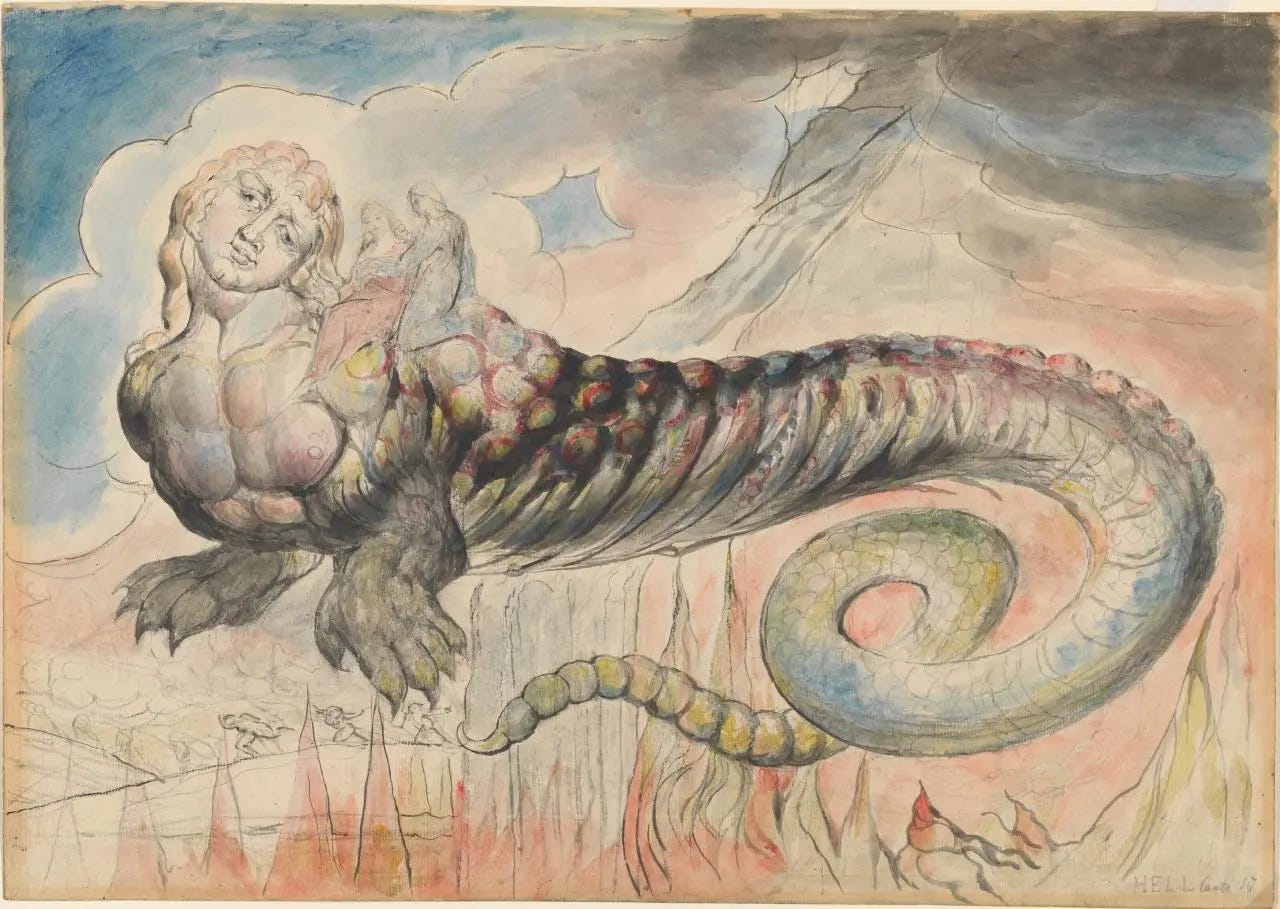
It’s written in verse and based loosely on the poet Stesichoros’ retelling of the myth of Geryon, a three-headed giant and cattle herder who was slain by the hero Heracles. Carson transforms the myth into a queer coming-of-age story. Geryon, a modern boy-monster, grows up to be a sensitive soul with an eye for photography and a soft spot for the wild, sexy Heracles.
I love myth retellings, and particularly the ones that have completely reimagined the original, the way Carson has done here. (I love Jeannette Winterson’s Weight for the same reason.) These stories remind me that, once a story exists in the world, it can eternally be remade. This is the beauty of writing, of bothering to tell stories at all. In a way, we’re always playing a round of exquisite corpse, that game where you draw the head of the beast and then fold the paper and hand it to the next person, who can then start drawing its body, its legs, its tail. And we’re playing it with centuries’ worth of people who have come before us, who have drawn the heads of our beasts. We’re playing it with the dead.
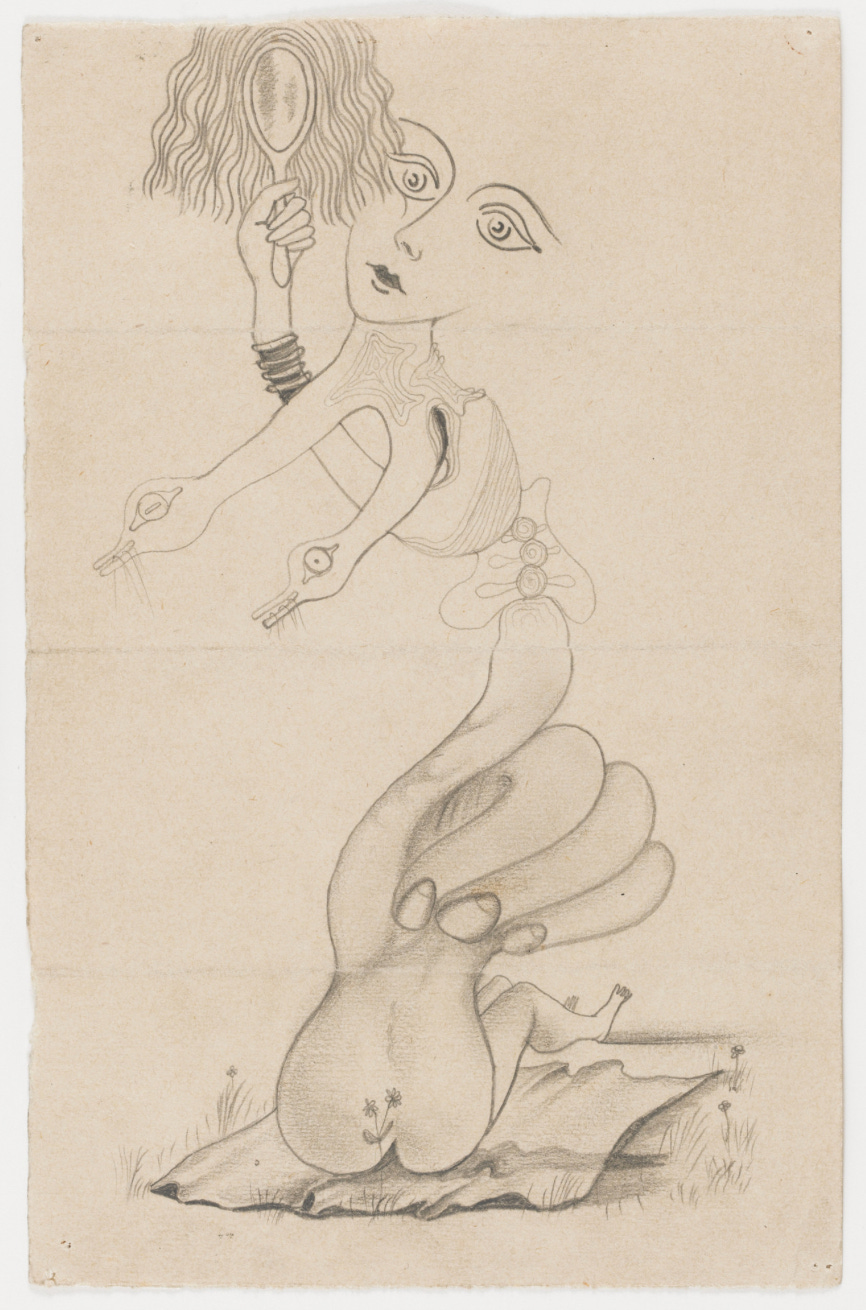
Stories are infinite in multitude, circumstance, detail. Different people, different places, different interpretations. Still, we’re mostly telling the same ones in new ways, finding new shapes for the same old feelings. Love, loss, death, becoming, the search for meaning. It’s so deliciously human, that big story always hiding inside the small, delicious in both its particularity and its sameness.
And there’s great freedom in this, too. The freedom to make the thing, to draw the beast’s head. Or, to find the head already drawn and continue drawing its body, downward, outward. Drawing it however you like it. In verse if you like. Drawing it so that Heracles is in faded Levi’s, tight across the crotch, and is too often shirtless without good reason.
Every head drawn births infinite possible bodies. Each new body can reanimate an old, dead head. And all those beasts, all those exquisite corpses, can in turn form their own lineage. A new species of stories, which can keep multiplying and mutating into eternity. If I can keep this in mind, I don’t see how I can ever run out of inspiration again. Inspiration becomes less about invention than about noticing what’s already there and how it can be made new.
Stories are long lines of small borrowings. Everything comes from somewhere else. Everything is slightly different than what came before. And everything stays, despite something new always arriving.
Writing this makes me feel better about the stuff stuffing my flat. Stuff may be a scavenger, but every beast has its head, even if it’s hard to locate. Geryon, the original Geryon, had three. So, if I can find it, if I can find the head of the stuff, I can fold it under and decide what happens next. I can draw it the way I like. I can make it new.