

september harvest
a month on sx-70 film

This month, I found an SX-70 Polaroid camera at a flea market. I’d been playing around with a more recent model, which I disliked for its ugly plastic body and awkward focal length, so I was thrilled with my find. It’s a beautiful camera; it folds into a neat square and comes in a leather case. It’s the same camera Andy Warhol used to photograph his friends and muses in and around The Factory, and the same type of film American painter Cy Twombly used to make his dreamy photographs, images with a paper-like texture and blurry quality that give me a kind of visceral satisfaction. With the first pack of film loaded, I documented my days.
The whole family gathered to celebrate the birthdays of our youngest members. My little brother Titus turned four in early September; my sister Pollie, an October Scorpio, will be six in a few weeks. We gathered at my father’s house in the fields around Kortrijk. Everyone had to wear fun socks. I’m not the type of adult who owns fun socks, so I borrowed a pair of Adam’s, who is also not that kind of adult but had them anyway, a black pair with a bright, full moon and the Polish word for ‘future’: przyszłość. We played games outside as dark clouds massed over the rooflines. My dad and his wife had set up a relay race. I ripped my jeans trying to jump off the bike my aunt was steering, wobbly, towards the wheelbarrow I then had to transport Frauke in, towards a basketball hoop, where she then had to score a point.
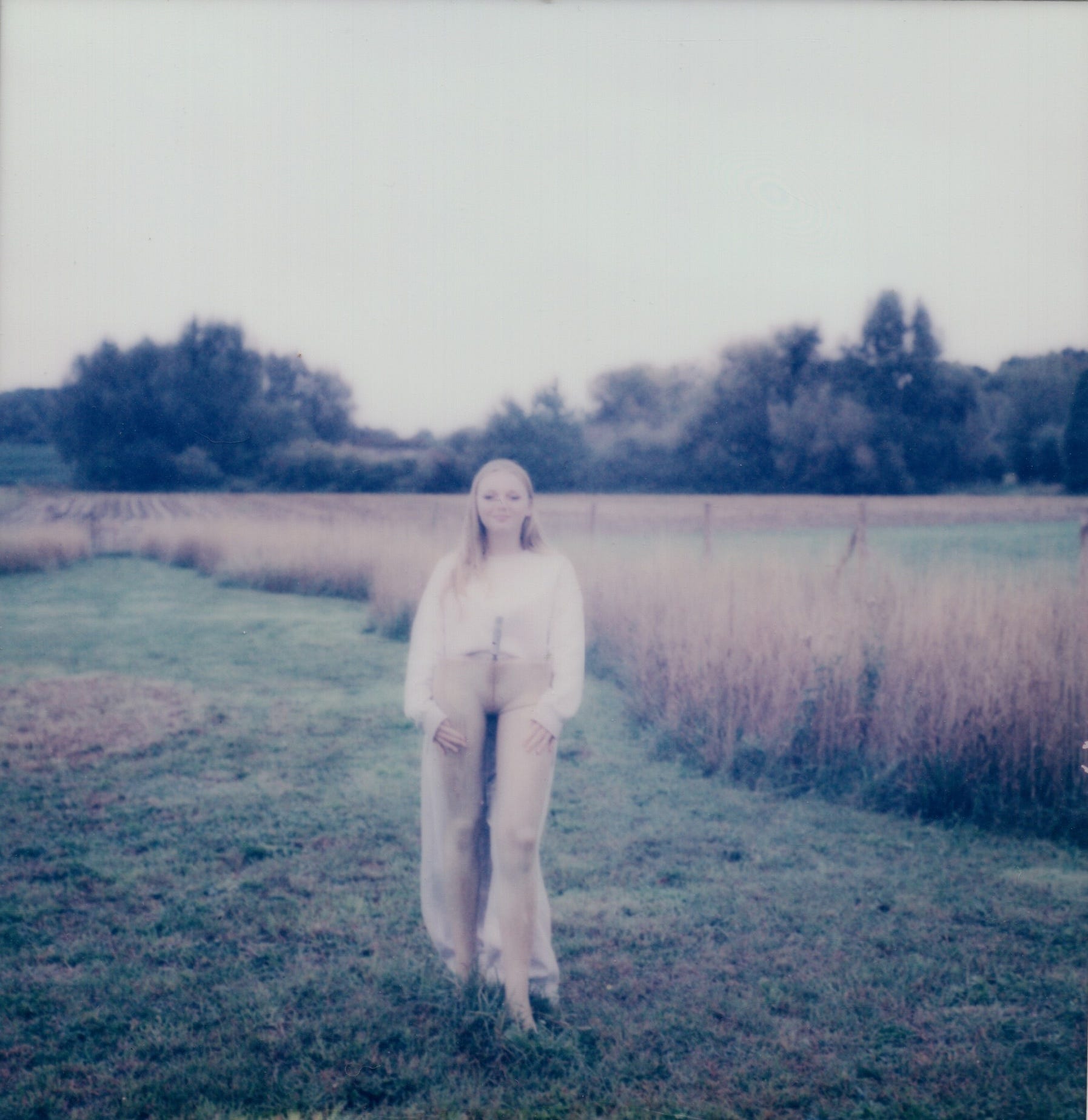
Frauke is the only sibling I have who I didn’t know since she was born. She came into my life when I was in my early twenties and she was barely two; a pale, bird-like child coming to live in our house, a few years before my parents’ divorce. Now, she’s fourteen years old, a tough, gorgeous, sensitive, brave, funny kid who wears false lashes to family gatherings. While everyone was getting high on sugar, I asked her to step into the fields with me. I wanted my first photo with this new camera to be of her. So here she is, standing in my father’s garden, the fields foggy and rain-soaked behind her. She’s half-hiding behind a random pair of mannequin legs that live there, in my father’s garden; my family like collecting oddities. The colours are faded, the exposure is a bit off. That’s fine. There was more birthday cake than we could ever eat.
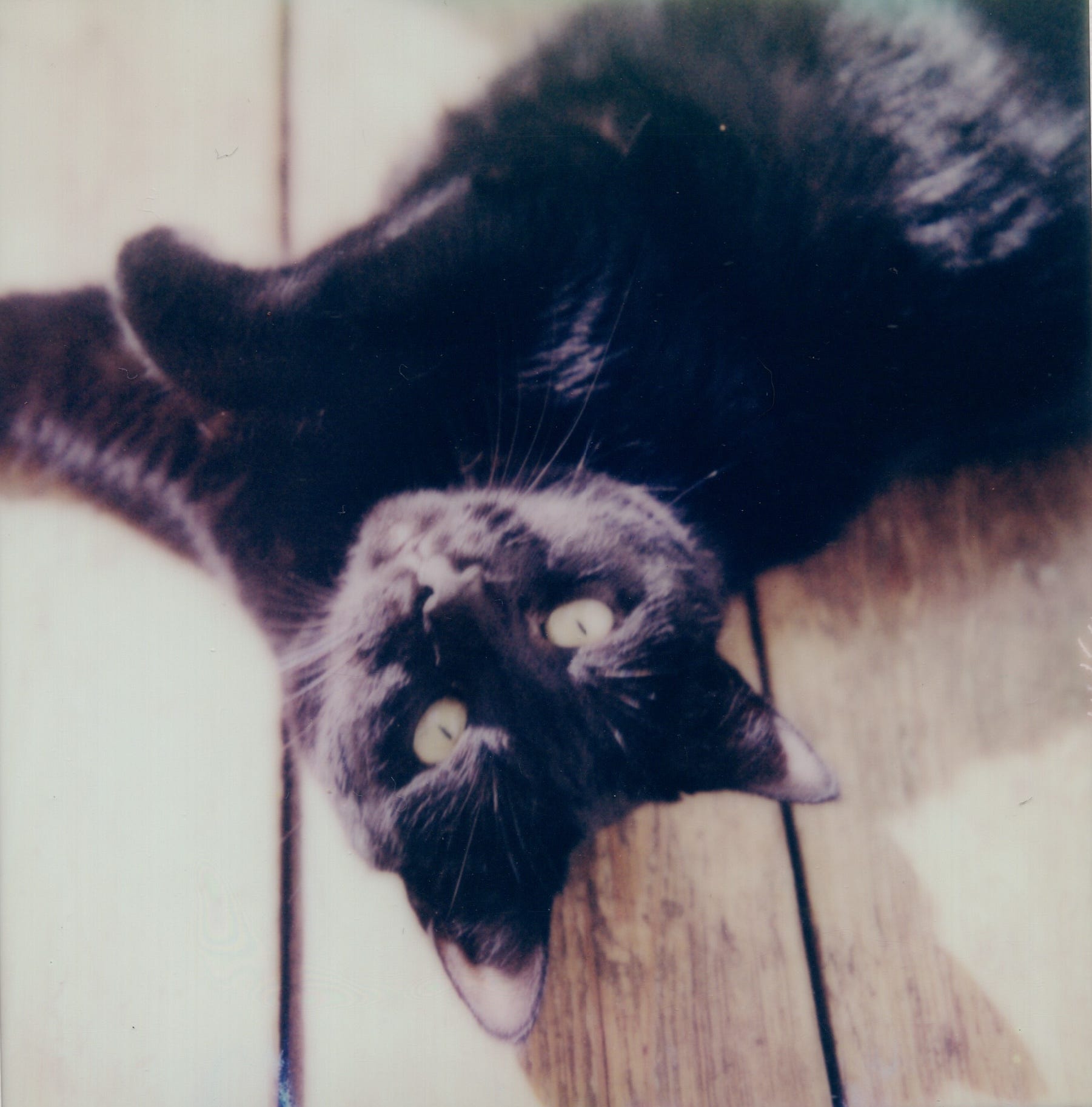
Here’s my cat Pencil sleeping in the September light. September light has this richness to it. Really, it’s similar to the cycles of the moon: if summer is full moon, harsh and bright, and spring is the waxing gibbous gathering its strength, its light still milky and pale for now, September has this gentle, slowly waning brightness. You can tell it’s still full, but the harsh edges have disappeared, and what’s left is golden. I didn’t get to see much of the September light, unfortunately. I got Covid a week in, after my first hot yoga class in ages. I was stuck on the sofa for days as the virus gradually consumed me, swelling in my sinuses, hardening into headaches.
I often find myself wishing for illness as an excuse to do nothing and let my body rest. But it never comes when it should, and it didn’t this time, either. There was an Anne Carson talk I’d been excited about, and there was all this September light to soak up before winter. Being ill planted the clock of my body firmly into autumn. Having a few twenty-seven degree days sprinkled in felt almost inappropriate. I struggled more than I usually do with things not clearly being one thing or the other. I tend to thrive in the in-betweens, but suddenly found myself craving order, a certain chronology. Neatness. If autumn is coming, which it will anyway, then let it. Allow me to prepare for it, to feel it, to get used to it, to be inside it. Let me get familiar with its shape, see if I can take it on.
There’s a sense of grief attached to summer this year. The grief of having had a long, luxuriously warm summer and not having enjoyed it nearly enough. Having spent it working, worrying, renovating, burning out, feeling like shit. I feel like the grasshopper in Aesop’s fable, comparing myself to the ant, except now it’s reversed. I’ve been so preoccupied with the demands of life I forgot to have enough fun to make it through winter. I barely, if at all, swam in the sea, lay in a field, or ate fruit fresh off the tree. I got distracted by all this work. And this wasn’t just a personal failing. It felt inevitable, because the work was everywhere. But I forgot, or rather, I was unable to tend to the real work of my life, which is making it through the dark months.
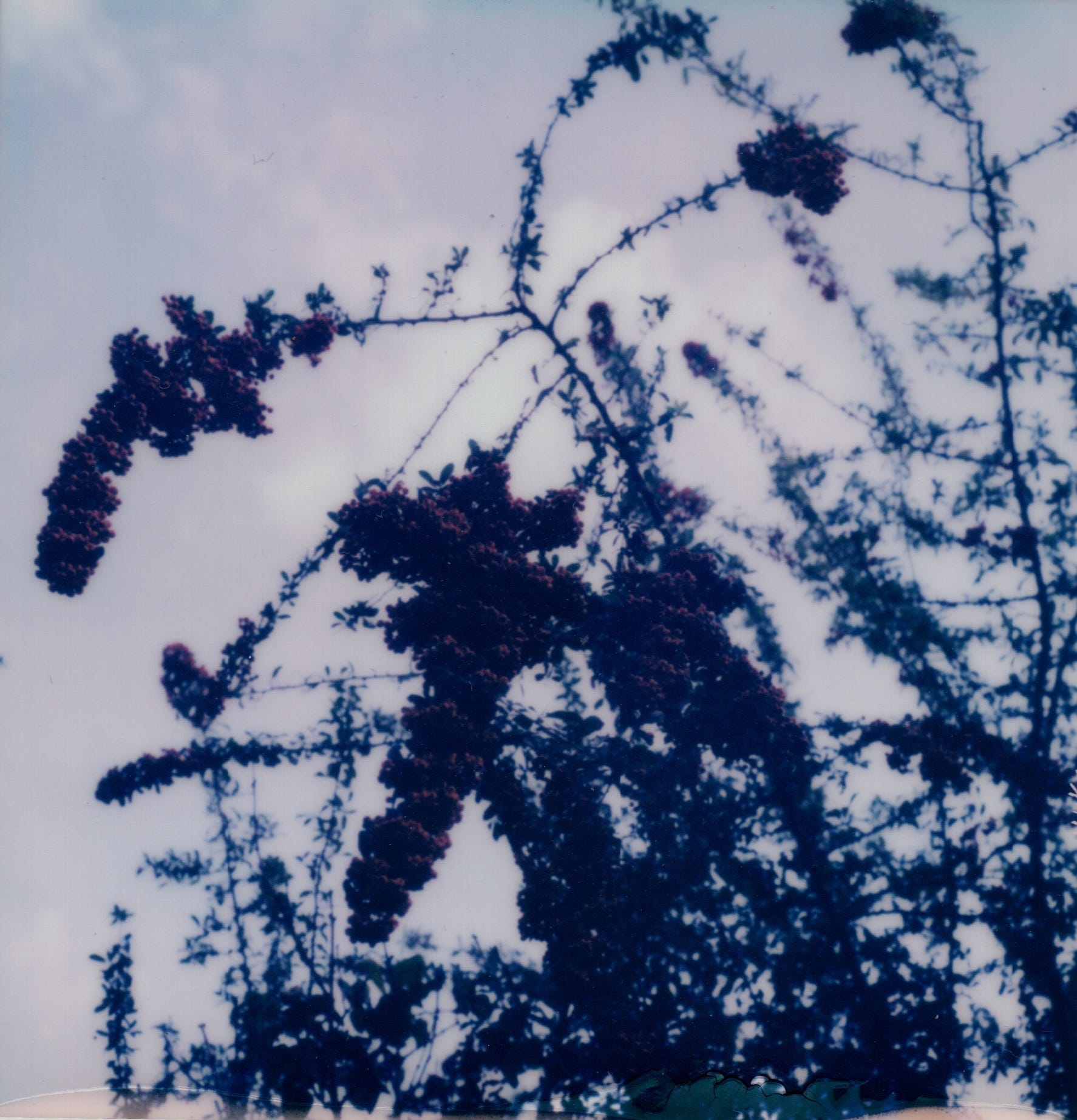
According to the AI-powered plant detection tool built into the photo app on my phone, this is a scarlet firethorn. It grows outside my house, on the edges of a pocket-sized green space, right behind the bars of the basketball court. It’s a tall shrub I must’ve walked past a million times, but never really noticed until it burst into a riot of orange berries. Since then I’ve found myself stopping and staring at it again and again. Something about the colours, I think. Not that you can really see them here — the SX-70 film is quite humble, if not a bit sombre. I’ve taken a far better photo of this same bush before. But ‘better’ isn’t the point of this post, I suppose. This is the September harvest, and this is the fruit it bore (though this particular fruit might cause nausea and vomiting).
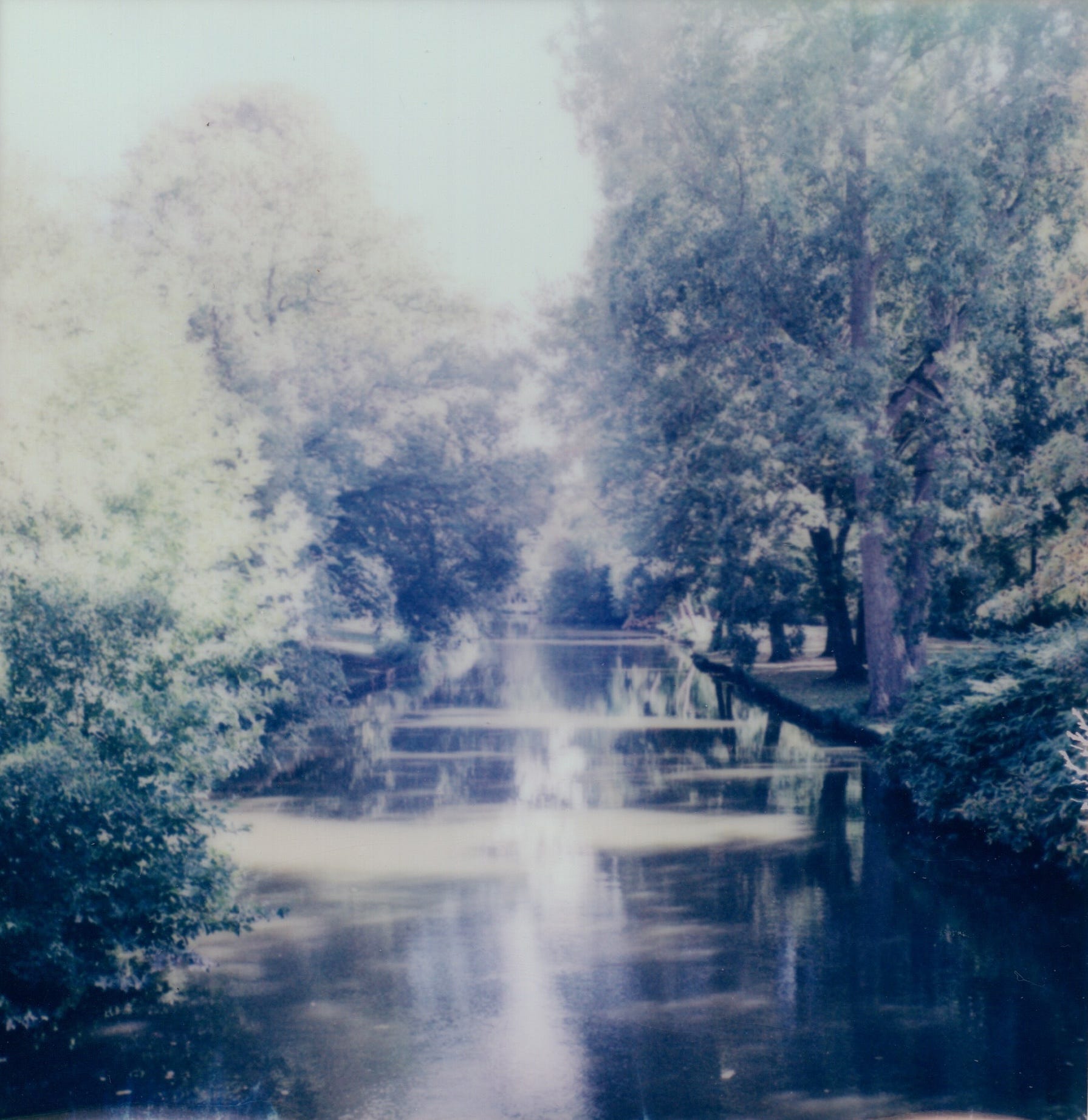
I was in Bruges for work. I’d just published this piece, which felt both unsettling and exhilarating, like setting free a wounded bird you’ve nursed back to health, and watching it fly from your hands, beyond a reality you can see. It was a sunny day with bright blue skies, a scattering of clouds, sheep-like. A Palestinian flag hung from the church tower. Things were, briefly, very, very beautiful. I could close my eyes and tune out what I’d seen on the news earlier that morning, what I’d seen on the news these past two years, these past five, this past forever. It didn’t feel like running away. Crossing a bridge in the Minnewaterpark, pictured here, I saw at least ten different shades of green melting into one another, and I was moved by it profoundly, which I took as proof that I had not yet lost hope, and I was not too jaded to care. Then I had to run for the train.
This image, tucked into my bag too quickly, crinkled by having to share it with my groceries, doesn’t say much. Except, I’d almost not left the house that day. I wasn’t ill anymore, but I still felt tired and foggy, translucent, as I described it in my journal. I forced myself out to a hatha yoga class, which slowly caused ripples in my stagnant pond of a body. As I lay in corpse pose afterwards, I felt my teacher’s cold hands pressing my shoulders into the mat. It felt so good to be perfectly level with the earth. I walked home listening to Peace Frog by The Doors. I saw it for myself: even bad days can end in pink skies.
In the spring, Adam and I bought a flat. It used to belong to a 107-year-old woman, born at the tail end of the First World War. Now that she can’t live alone anymore, we were able to buy it from her. My friend Laure lives downstairs. Other friends ended up buying the third flat on the top floor. Soon, we’ll all be living there together, each in our own space, but together, with a shared car, a shared front door, a shared view.
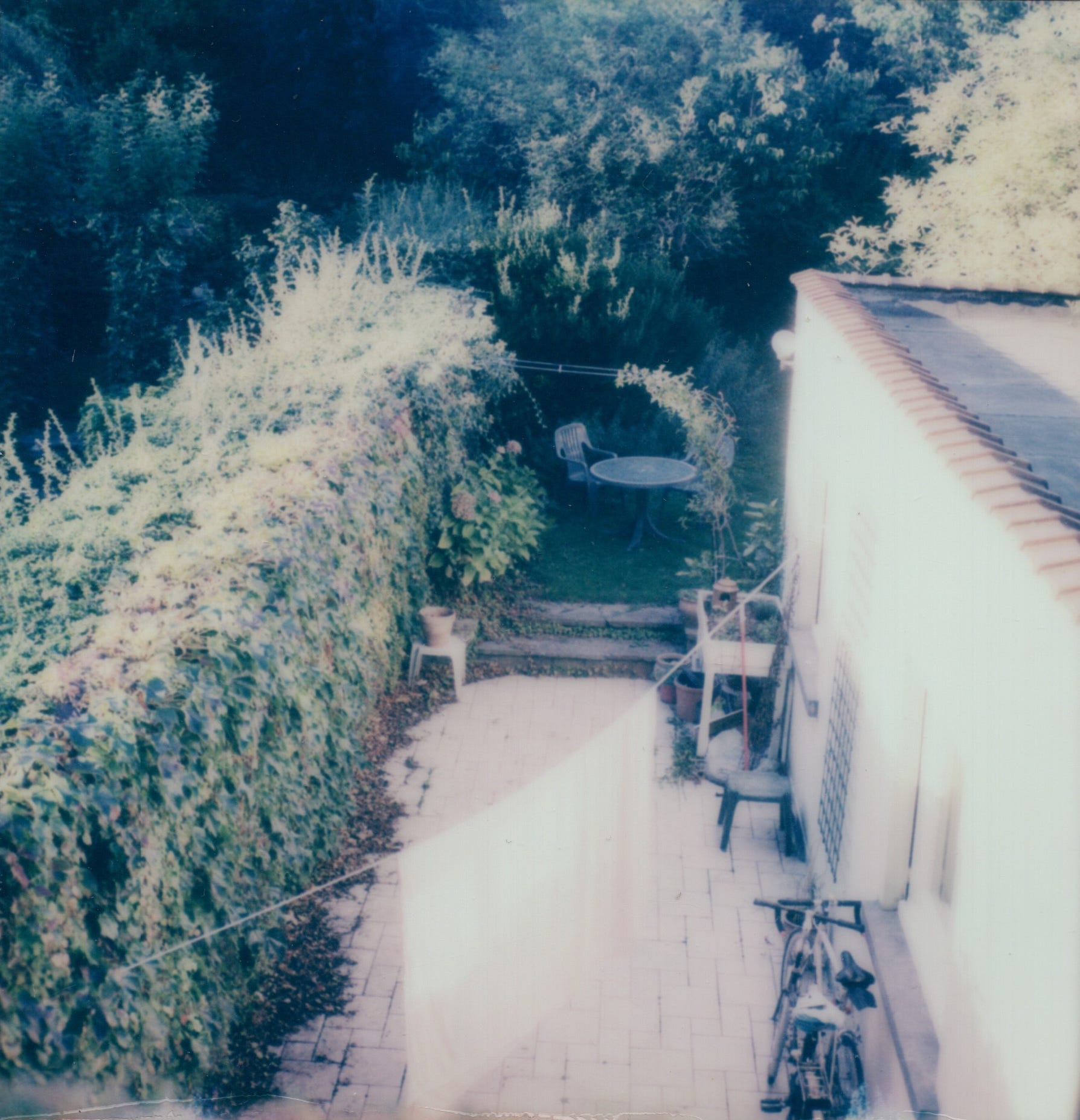
For months now, we’ve been renovating the place. It needed a lot of love; it hadn’t been redone since it was built in 1951. A team of builders, led by a contractor named Sylwester, have turned it into something that, for now, still resembles a building site, but which we have to move into in October anyway, whether it works for us or not. This view, of Laure’s garden, her pink bedsheet drying in the, yes, again, September light, helps a lot. Outside the frame is a wide open sky and the green dome of the basilica. Birds dance and wheel in the white like tiny ice skaters. Through all the dust, dirt, and rubble, there is always this: a few trees, a sky, and the knowledge that things will soon settle, as dust famously does, as all things do.
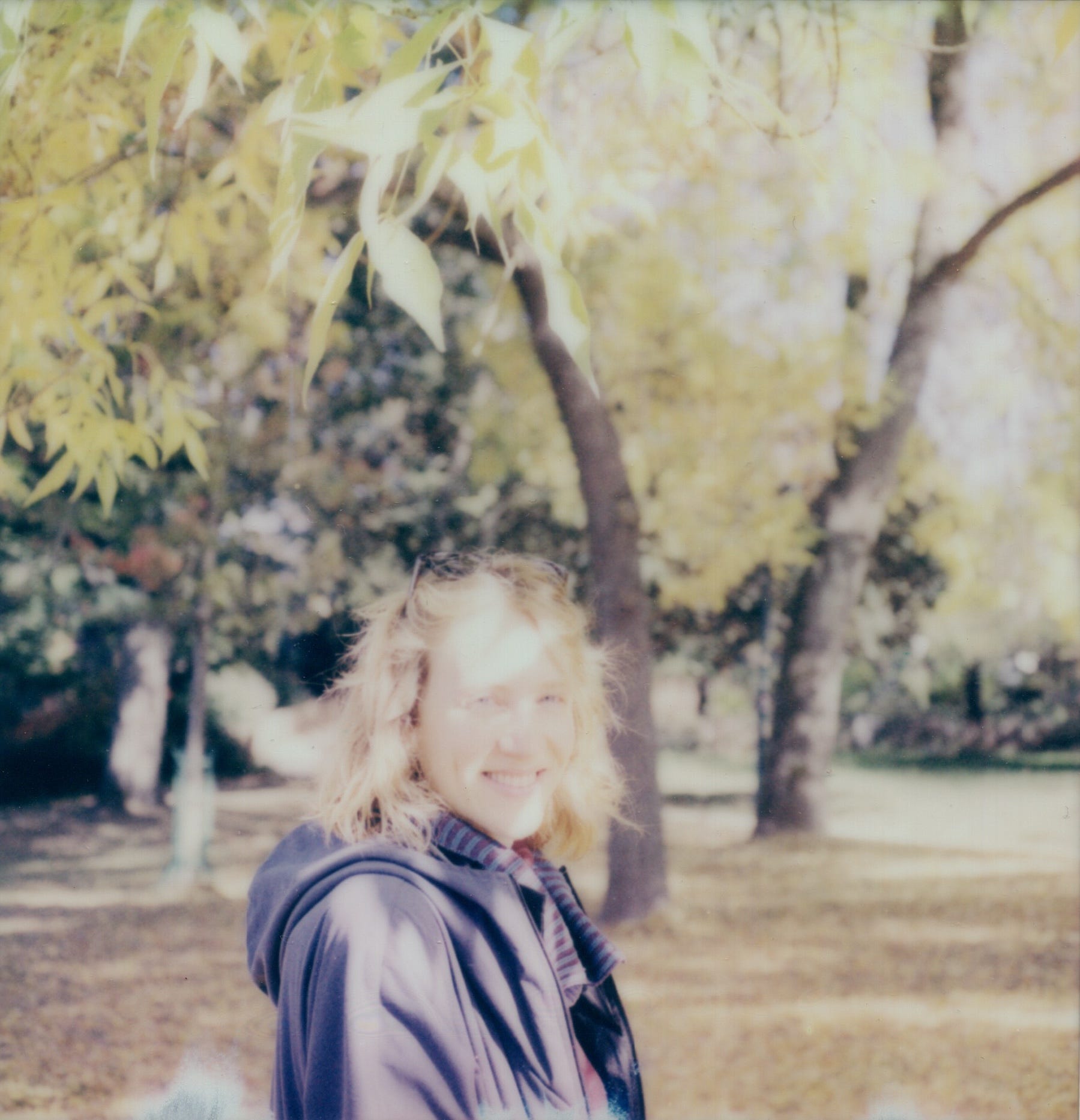
This is my friend Aurike. Before I took this photo, and before we went on the walk where we found this yellow tree she’s standing under, we had a long conversation sitting in the sun and drinking orange lemonade. I’ve never been that good at maintaining friends; I barely have anyone left in my life from secondary school or my university years. But there is Aurike.
I remember the first time we met. I must’ve been around twenty, twenty-one, and I was dating my university boyfriend, who I’d originally fallen for because he was smart, a little awkward, a know-it-all, slightly chubby, and he wore his father’s blazers to class. When we got together, he swiftly went through a transformation, a glow-up of sorts. He became well-dressed, relatively attractive, and kind of insufferable. His charming know-it-all-ness turned him into a permanent Devil’s Advocate. It wouldn’t be long before he’d turn into a fully fledged neoliberal who loved picking fights and endless debates with his (and my) progressive parents. He worked at a bar and made good money; I worked at a bar and didn’t. He bought me Steve Madden stilettos with 10cm heels. He liked taking me out that way, wearing a short bodycon dress and those massive heels, my tits hoisted up to the heavens in big push-up bras, which I used to wear at the time to somewhat resemble a Victoria’s Secret Angel. It was on one of those nights I met Aurike. She was gorgeous and I was dressed like a footballer’s wife. She was one of the boyfriend’s old classmates. When she smiles, she smiles with her entire being. The boyfriend, for obvious reasons, didn’t stick. Aurike, for equally obvious reasons, did.