

the light room / jazz
one book that wasn't for me and one that was

The first time I saw Kate Zambreno’s The Light Room: On Art & Care in a local bookshop, I felt the intense desire a beautiful object can awaken in you. A feeling of wanting something instantly, desperately. This is the feeling our world runs on, this hungry, junk-food feeling. It was a gorgeous book. Wrapped in plastic, like something too precious or dangerous to touch, which only made the need more urgent. No way to see what was inside. No way to extinguish the flames of this wanting. The shop lights caught the plastic in such a way that the book itself seemed to shimmer. Annie Ernaux had written across the front that Zambreno had invented a new form. And if Annie Ernaux, who had seen so much, claimed to have seen nothing like this, then what exactly was I looking at?
I thought, the way I sometimes think these things, that owning it might make me better, more interesting, by proximity. Its beauty and sparkle would rub off on me, and I’d validate the identity I’ve built for myself as someone who likes books, nice covers, art, and care.
Also, I was desperate for good reading, as I always am when life becomes too full. I wanted to be swept away by the tides of a good story until I no longer knew which way was up, what my name was, what country I was in. I wanted to be dragged along a rock face or two, perhaps, to scrape off whatever needed scraping before being spat out again, wet and trembling, on the other side of it. All so I could, just for a little while, escape this rigid body with its neck pain and shallow energy pools. This life of kitchen counters that will not stay clean, of the Sisyphean labour of three meals a day, of a home renovation like a mountain I’m chipping away at until it becomes nothing but a pebble in my boot.
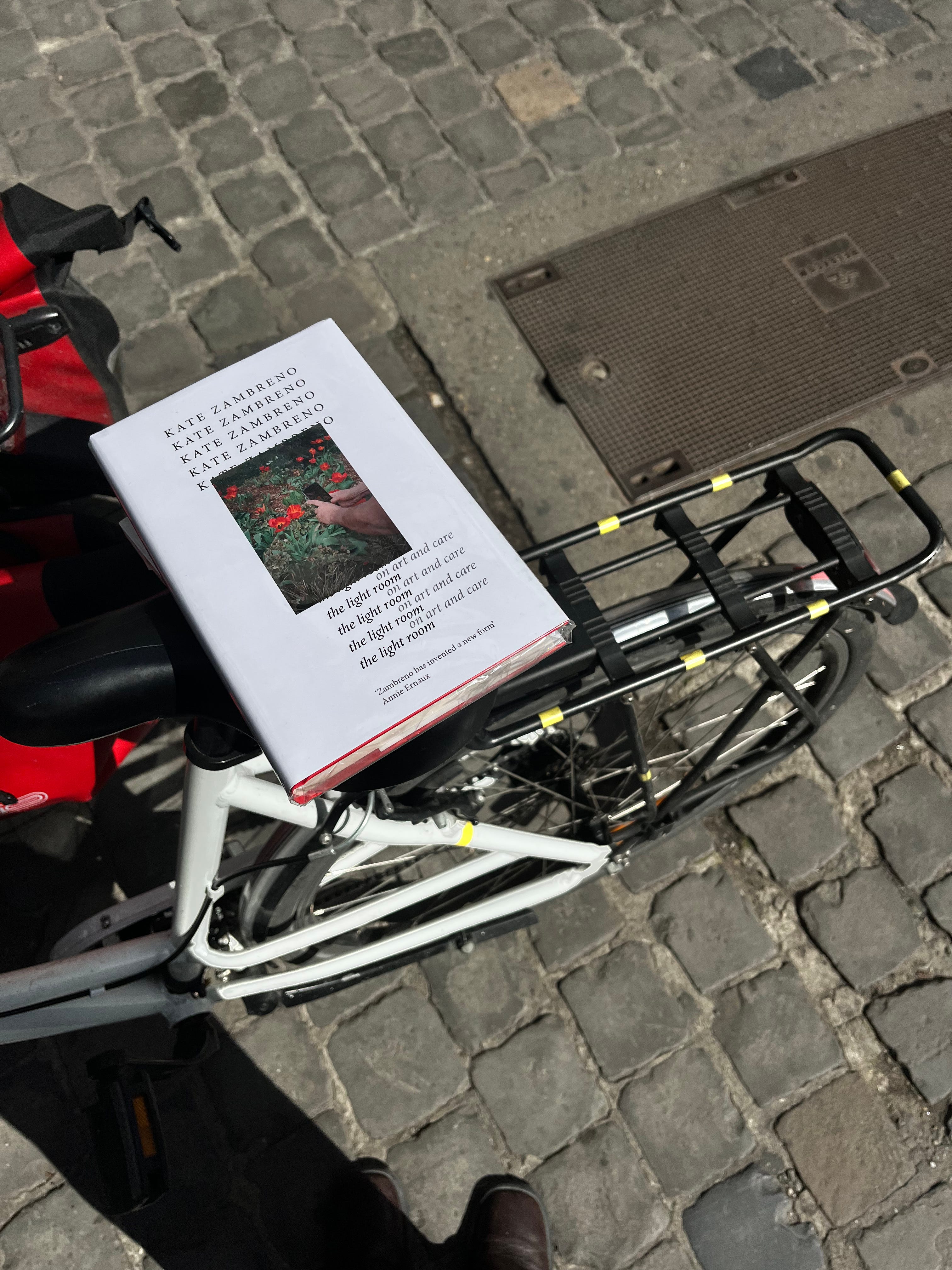
So I took it home. Giddy. It cost almost thirty euros, which is far too much for a mystery. But desire doesn’t always make sense. In fact, it usually doesn’t. It arises in the body the way thirst does, the way hunger does, and fixes itself to whatever is near. It’s absolute. I wanted it, so I got it. And at home, I did what you do in these situations: tear off the sparkly dress and bite down.
Except, I quickly realised that my hot date was even more exhausted than I was. What I found inside this gorgeous cover, inside Annie Ernaux’s approval, was a mother tired past the point where the word means anything. A writer raising a toddler and a newborn during the pandemic, in a winter that would not end, in a loneliness so vast it had its own time zone. Not only did my desire melt away; I felt it was almost inappropriate to have felt it in the first place.
I tried to slow into it. I let myself remember my own lockdown, trapped in an attic flat so small you could cross it in five steps. The only view was through a skylight that did nothing but taunt me: all that saturated blue, spring showing itself at its most beautiful, while I sat beneath it, unable to touch it. I’d arrived in Brussels six months earlier, recently single and free in a way I hadn’t been before. I’d started going out, partying, making up for the time I’d lost being a working student. For a brief pocket of time, and for the first time ever, I was wild, maybe even a bit reckless, which are not words that usually fit me. So I experienced lockdown the way a feral animal experiences being caged. By the time the gates opened again, I was domesticated, traumatised into submission. Five years later, I still feel that way sometimes.
But I couldn’t get used to The Light Room‘s particular slowness. I stumbled over my own feet trying to match it. There were brief moments of relief, when something picks up, when Zambreno writes about art and artists I love: David Wojnarowicz, Peter Hujar, Derek Jarman. It’s a shame I read Olivia Laing’s Funny Weather recently enough to remember that the best parts of Zambreno’s book are already in Laing’s, and they felt more alive there, too. And then there would be another passage about children’s toys, about the wooden Montessori ones for mobility or the marble run bought for the eldest, and I would quickly feel it closing in on me again.
I believe in writing what you know. I also believe that the specific can unlock the universal, and the personal the political; that in telling about your own life with enough precision you may be able to touch everyone’s. But those beliefs didn’t help me here. I don’t have kids. Motherhood is a question to which I have no answer. I kept digging for the universal and didn’t find it. Worse, I’d started this with desire, and now I was thinking of toys, tummy time, tiny clothes, leaking breasts, the pandemic, and the colour white.
This is not a bad book. I don’t think it is. Annie Ernaux called it a new form and maybe she’s wrong, or I am wrong, or we want different things from newness. But at some point I started avoiding it. I picked up my phone instead, where I happily read things far, far worse than the musings of a tired mother. Eventually I understood what had to happen: I had to leave the book be. Zambreno deserves better. She deserves a reader who wants what she’s offering. Someone who can really meet her there, inside of her gorgeous cover, her effective prose, her suffocating domesticity.
I wanted something else. I wanted to dance. Needed to sweat. Craved heat. Desire, violence, music, history, rage, bodily fluids, craziness, drunken trumpets. A pre-pandemic kind of wildness in book form. I didn’t really know this until I found it; until I found Jazz.
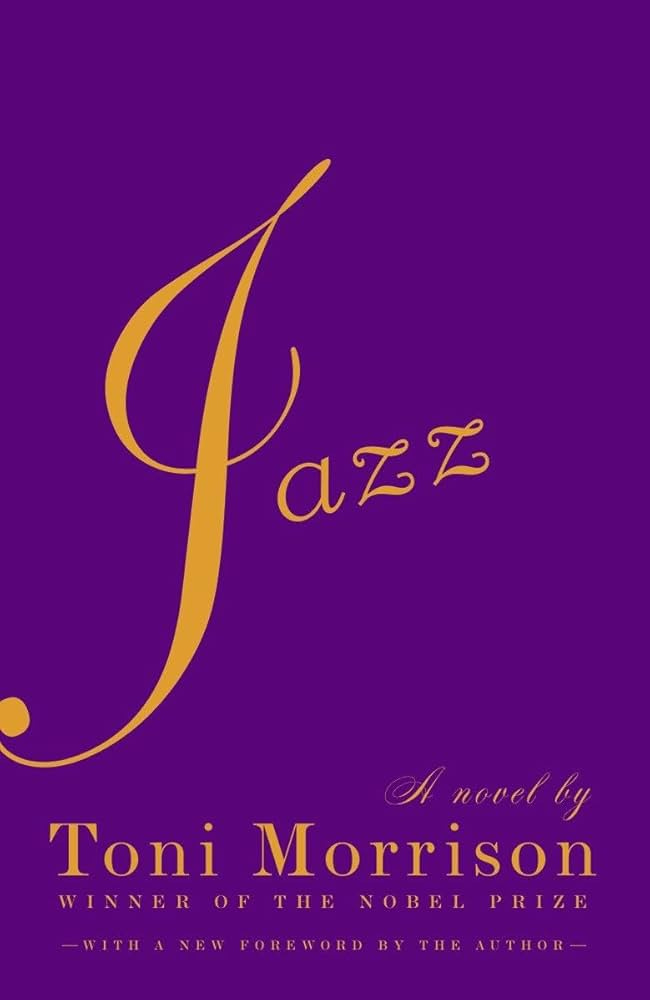
Jazz is a book with a perfect title, because it is a novel the way Sinnerman by Nina Simone is a song. It starts in one particular way, with a story you think you understand. I suggest playing it while reading what follows.
In Sinnerman, a sinner is running from judgement, looking for shelter but not finding it, not in the rock, not in the river, not in the sea. (What’s the matter with you, rock?) This is the central story of the song, its spine.
Toni Morrison’s Jazz has its own spine: a love triangle gone wrong. Joe Trace, middle-aged and married to Violet, falls for an eighteen-year-old girl named Dorcas. He loves her, then kills her when she tries to leave. Violet, eaten up with grief and rage, shows up at the funeral and tries to cut the dead girl’s face. When she goes home after, she opens all the cages and releases the pet birds, even the parrot that says I love you. This is not a spoiler: the narrator tells us all of this in the first paragraph, in the voice of a nosy neighbour, dripping with schadenfreude.
In Nina Simone’s song, the sinner runs for about three minutes before the piano, that urgent pattern that seems itself to be running, drops away. There’s a temporary silence. Did he stop? Did he find his hiding place, some shelter from divine judgement? Of course not; it doesn’t last. Quickly, the song fills up again, with metallic percussion, with hands clapping, and finally the return of the piano, hesitantly this time, delicately, sock-footed, tiptoeing back like someone coming home too late, trying not to wake mother.
Violet and Joe’s story shifts that way too. Time stops being a straight line and becomes a spiral, or a tree with a wide, branching canopy. We move backwards and forwards, before Dorcas’s death and after it, before moving to the City and after, the City being New York, a character with desires of its own. We go further back still, before Violet and Joe were born, into history, into bloodlines, into minds and stories that aren’t even theirs, or are they? The story branches and branches again. It brews, it stews, it builds, until all that’s left is raw feeling, like the soft vocalisations at the very end of Sinnerman: a whimpering, a begging, a settling.
I’m not ready yet to say smart things about Jazz. I’m still sitting at the edge of the dance floor after the music has stopped, spun dizzy, trying to remember how to be still. I need to rest, eat, hydrate. Let the body forget what it felt so the mind can understand what it means. I don’t smoke, but I think I need a cigarette. And this was what I wanted: to be lifted outside of myself. To forget myself entirely. Neck pain and all.
What I can say is this: Morrison’s writing is singular. It is excellent. I’d like to leave you with a passage I started highlighting only to realise it went on for many paragraphs, and there was no place where the brilliance of the writing dimmed enough for me to stop. I won’t share the whole thing because I respect the book in its entirety, and I hope you’ll read it. But I think you’ll feel the desire oozing from these lines; you’ll feel the City, its sky, its breath, and inside it, faintly, the sounds of thousands of lives rubbing together, of jazz drifting from hundreds of doorways. And you’ll feel yourself being so very small inside it all.
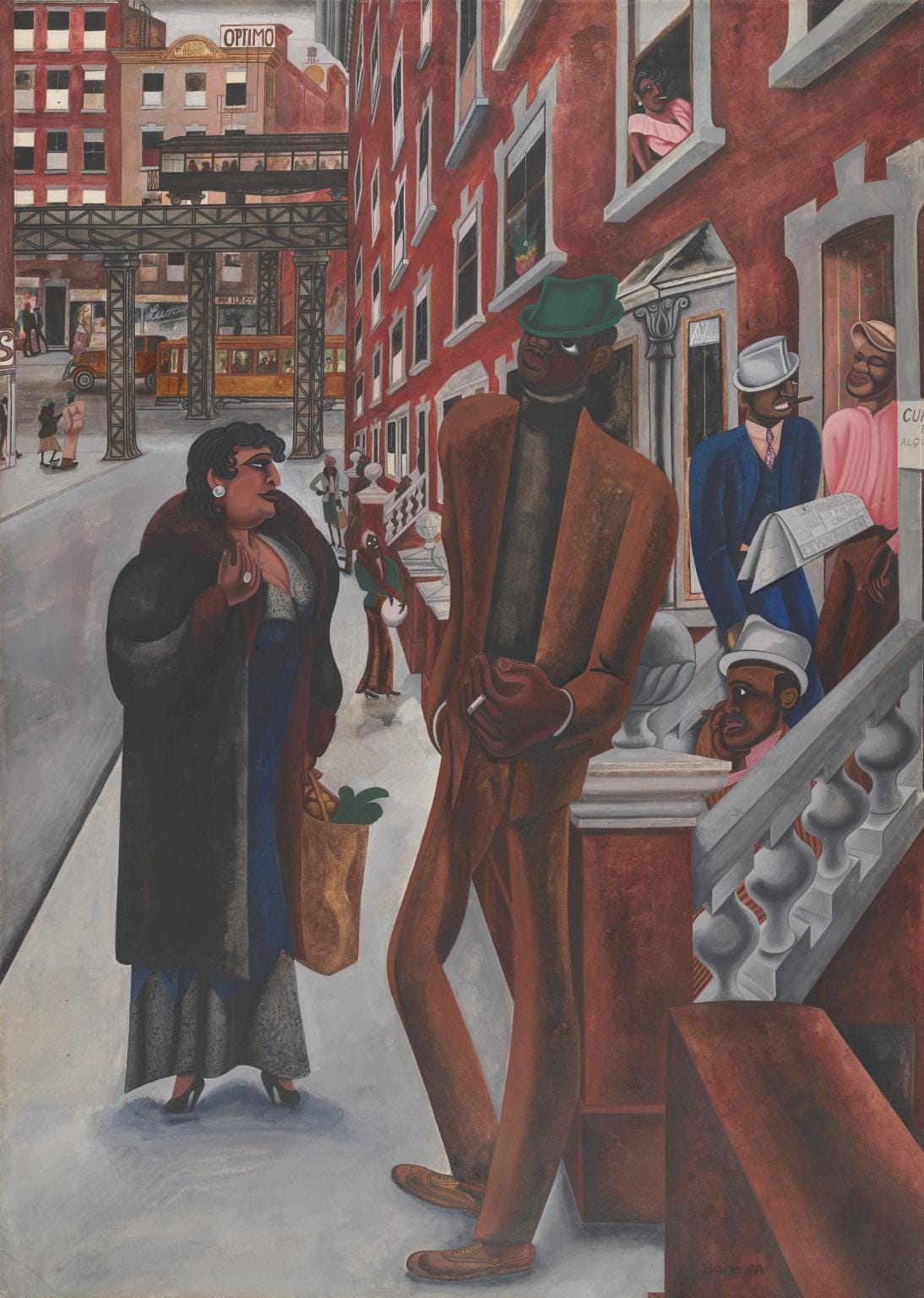
The woman who churned a man’s blood as she leaned all alone on a fence by a country road might not expect even to catch his eye in the City. But if she is clipping quickly down the big-city street in heels, swinging her purse, or sitting on a stoop with a cool beer in her hand, dangling her shoe from the toes of her foot, the man, reacting to her posture, to soft skin on stone, the weight of the building stressing the delicate, dangling shoe, is captured. And he’d think it was the woman he wanted, and not some combination of curved stone, and a swinging, high-heeled shoe moving in and out of sunlight. He would know right away the deception, the trick of shapes and light and movement, but it wouldn’t matter at all because the deception was part of it too. Anyway, he could feel his lungs going in and out. There is no air in the City but there is breath, and every morning it races through him like laughing gas brightening his eyes, his talk, and his expectations. In no time at all he forgets little pebbly creeks and apple trees so old they lay their branches along the ground and you have to reach down or stoop to pick the fruit. He forgets a sun that used to slide up like the yolk of a good country egg, thick and red-orange at the bottom of the sky, and he doesn’t miss it, doesn’t look up to see what happened to it or to stars made irrelevant by the light of thrilling, wasteful street lamps.
From Jazz by Toni Morrison.